Creative mobility doesn’t stop. Directors, strategic consultants, architects, designers, and cultural producers move between regional capitals on defined projects with limited time. In that context, accommodation stops being a neutral background and becomes part of the work environment itself.
Silent luxury for international creatives isn’t about spectacle. It’s about aesthetic functionality — spaces that support concentration without competing with it. Whether in a furnished apartment in Bogotá, Panama City, or San José, the right residence offers more than comfort. It offers clarity.
Design that absorbs urban volume
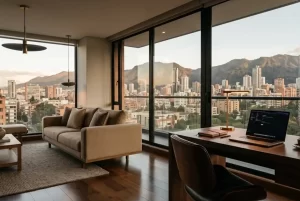
Latin American capitals are intense. Active financial districts, constant traffic, and overlapping agendas are part of the landscape. The interior of a residence needs to function as a counterpoint — not through absolute isolation, but through precise design decisions.
Palette and materiality
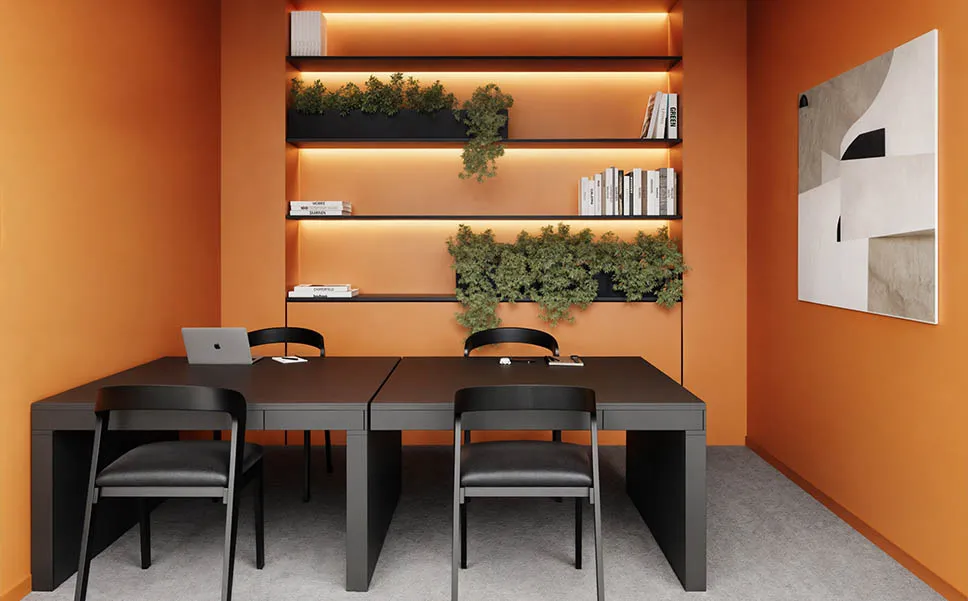
Neutral colors, balanced textures, and an absence of unnecessary visual stimuli allow the mind to stabilize. A saturated environment competes with creative thinking. A contained one accompanies it. Functional aesthetics aren’t meant to impress — they’re meant to sustain long processes of concentration without introducing friction.
Distribution that supports extended focus
An international creative staying in an executive short-term rental isn’t only resting. They’re developing ideas, structuring proposals, making strategic calls. The spatial layout needs to support that: a clearly defined work area, real separation between rest and production, wide surfaces and visual order. In a traditional hotel suite, these functions usually coexist in the same space and compete for it. In a directly operated residence, the layout allows more natural transitions between modes.
Light and silence as working tools
Good lighting in a creative residence isn’t decorative — it’s operational. Controllable natural light during the day, indirect lighting for night sessions, and acoustic treatment that reduces external interference make the difference over a week-long stay. In cities like Bogotá or Panama City, where the business environment runs at high intensity, the interior needs to offer balance. Reducing stimuli doesn’t mean eliminating urban energy — it means modulating it.
Creativity needs structure, not just openness
Extended creative work requires stability as much as inspiration. In stays of one or several weeks, operational consistency becomes as important as design. A premium residence operated under clear standards — like the VEZRA Standard™ — prioritizes preventive maintenance, friction-free arrival processes, and coherent environments across cities.
For a creative working across multiple capitals, that consistency between Bogotá, Panama City, and San José creates mental continuity. There’s no starting from zero on each new assignment. The space becomes a quiet partner in the process — stable enough to disappear into the background.
Beyond aesthetics: control of environment
Silent luxury isn’t in the accumulation of decorative elements. It’s in the absence of unnecessary noise — visual, acoustic, operational. For international creatives, that translates into enough privacy to work without interruptions, autonomy to structure their own schedule, and design that doesn’t pull attention away from the work.
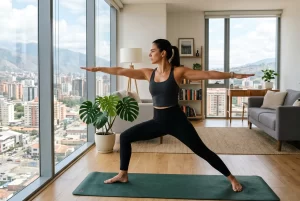
The furnished apartment in an executive context stops being temporary accommodation. It becomes a temporary studio. The city stays active. The interior stays still.
Stimulating environment vs. contained environment
| Visual input | Constant stimuli | Neutral, balanced palette |
| Spatial logic | Multifunctional overlap | Clearly differentiated areas |
| Privacy | High external interaction | Greater autonomy |
| Energy | Scattered | Focused |
FAQ
Why does the environment affect creative work?
Because excess visual and acoustic stimuli compete directly with concentration. A space that demands attention takes it — even when you don’t notice.
Is a residence better than a hotel for extended creative stays?
For stays of a week or more, a residence typically offers more space, more autonomy, and fewer operational interruptions than a hotel. The difference becomes more apparent the longer the stay.
What design elements matter most?
Neutral palette, quality lighting with real control, clear area separation between work and rest, and acoustic treatment that reduces external noise without creating a sterile environment.
Does silent luxury work the same across different cities?
It does, as long as operational consistency holds. The VEZRA Standard™ is designed precisely for that — so the experience in Bogotá, Panama City, and San José starts from the same baseline.
Is silent luxury compatible with high productivity?
It’s built for it. Reducing unnecessary stimuli and operational friction is what allows sustained focus — not as a side effect, but as the point.
Explore VEZRA residences designed to support creative work with privacy, consistency, and the kind of quiet that lets the process run.