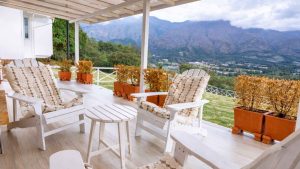
The question is often framed in terms of luxury, but in practice, that is not how the decision is made. For a CEO, where they stay is not an aspirational category—it is an extension of how they operate.
In a city like Bogotá, where time is fragmented by traffic, weather, and agenda, the criteria shift. It is not about finding “the best,” but about ensuring continuity, control, and clarity throughout the stay.
Rather than listing options, the answer lies in understanding how the decision is structured: location, environment, and operational model—aligned with the ability to maintain focus during business travel.
Location as an operating system: climate, rhythm, and efficiency
Bogotá operates under a high-altitude temperate climate, with constant shifts between sun, clouds, and light rain. There are no extremes, but there are fluctuations that directly impact mobility and daily rhythm.
This makes proximity a key factor. Reducing travel time is not a preference—it is a way to protect the agenda. The city becomes manageable when everything essential is within a functional radius.
Dressing in layers and planning routes is part of the system. But the real decision happens earlier: choosing an environment that does not require constant adjustment.
The areas that concentrate performance, not just exclusivity
More than exclusivity, what matters is the combination of access, services, and stability.
Chicó
Balanced between activity and control. Easy movement without losing rhythm.
Parque de la 93 area
High density of services and constant activity. Ideal for fast decisions.
La Cabrera
More discreet. Close to active zones with greater privacy.
Rosales
Elevated and quiet. Ideal for longer stays.
Usaquén
More residential, with variation depending on time of day.
Where they actually stay: less hotel, more system
This is where the logic changes.
A hotel is designed for rotation. It works for short stays. But over time, it introduces variables: constant movement, operational noise, and visible processes.
That is why many C-level profiles choose operated residences.
Not for size or aesthetics, but for what they eliminate:
- Unnecessary interruptions
- Dependence on external processes
- Constant exposure
This model reflects what happens when direct operation replaces intermediaries.
The result is an environment that does not require management. Everything works without intervention.
Three moments that explain how it actually feels
Morning
No transition between rest and work. The day starts without adjustment.
Afternoon
After moving through the city, returning does not require adaptation.
Night
Rest happens without interference. The environment remains stable.
The surrounding city: a functional system without friction
A) Key locations
Parque de la 93
El Virrey
Zona T
B) Restaurants
Harry Sasson
Osaka
Club Colombia
C) Banks / ATM
Bancolombia
Davivienda
BBVA
D) Currency exchange
Centro 93 as a centralized operational hub
E) Healthcare
Clínica del Country
Fundación Santa Fe
F) Shopping
Andino
El Retiro
Atlantis
G) Parks
El Virrey
Parque de la 93
Mobility: less movement, more control
Movement is not measured by distance, but by control over time.
Private transportation allows route optimization and reduces friction. When the location is correct, many trips simply disappear.
Moving less means operating better.
Key questions before deciding
Where do CEOs stay in Bogotá?
In northern areas with strong infrastructure and operated residences.
Do they prefer hotels or residences?
Residences for longer stays due to control and privacy.
What is the best area?
Chicó and Parque de la 93 are key references.
Is location important?
Yes, it directly impacts efficiency.
What do they prioritize?
Privacy, consistency, and operational ease.
When a stay becomes a system, not accommodation
A CEO does not optimize comfort—they optimize energy.
Every removed decision reduces cognitive load. That is why the environment must be stable, predictable, and frictionless.
Calm decision checklist:
- Strategic location
- Integrated services
- No-adjustment living space
- Consistent operation
- True privacy
At this level, before choosing, it is essential to understand what to review before booking a premium residence to ensure the experience holds over time.