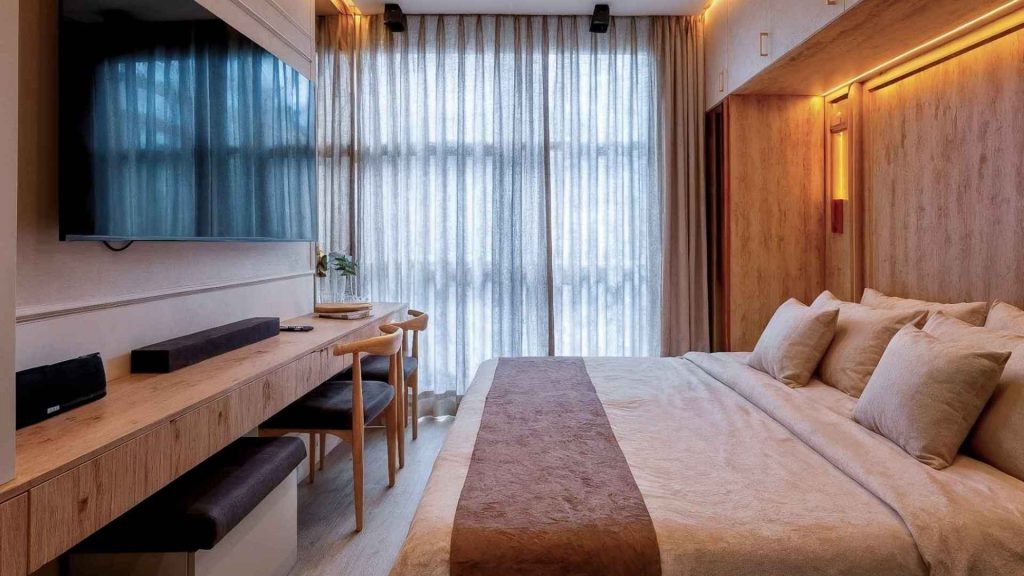
Luxury has changed form. For years, it was associated with the visible: large spaces, constant service, privileged locations. Today, especially in complex cities, that concept is shifting toward something less obvious but far more decisive: control—an idea closely aligned with silent luxury in Bogotá.
In an active capital like Bogotá, where rhythm adapts to traffic, schedules, and climate, the place you stay stops being a symbol and becomes a tool. It is no longer about where you sleep, but about how you sustain demanding days without unnecessary friction.
The comparison between a penthouse and a five-star hotel is often framed in terms of luxury. But the real difference lies in how time, space, and privacy are experienced. This is where the VEZRA standard redefines the category—not as an alternative, but as an evolution.
Where you are (city) + practical climate
The Colombian capital operates under a particular logic: there are no extreme climates, but constant variations. The day may begin with soft light, move through brief rain, and end with cool temperatures.
This behavior directly influences how the city is experienced. Movement requires buffer time, schedules adapt to peak hours, and the immediate surroundings gain importance. Having services, restaurants, and open spaces within minutes is not a luxury—it is an operational necessity.
Dressing in layers, prioritizing strategic locations, and avoiding unnecessary commutes are decisions that make a difference. The climate does not limit, but it demands awareness.
Where you stay (VEZRA as a standard)
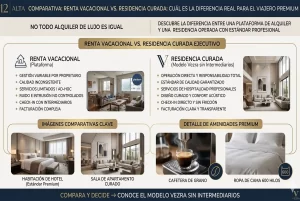
A hotel is designed to receive. An operated residence is designed to sustain.
The difference is not conceptual—it is practical. In a hotel, the experience is built around constant availability: reception, movement of people, visible services. It works for short stays, where interaction is part of the model.
VEZRA operates under a different principle. Here, service is not the protagonist—it is infrastructure. It is available when needed, but it does not interfere. Direct operation ensures that every element works without relying on third parties, showing why direct operation improves the resident experience.
What is perceived is not visible luxury, but the absence of friction. Nothing interrupts, nothing requires extra attention. That continuity is what transforms a stay into a livable experience.
How it feels inside (3 micro-scenes)
Morning
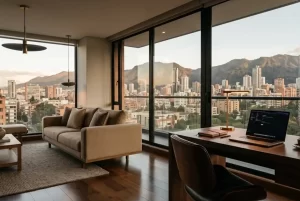
There are no corridors, no waiting times. The day begins in silence, with natural light and enough space to organize thoughts before engaging with the outside world.
Afternoon
After meetings or movement across the city, returning does not require adjustment. Everything is as it should be. No external noise, no constant flow of people.
Night
The city remains active, but the interior does not reflect it. Rest is deep and uninterrupted. The feeling is control, not isolation.
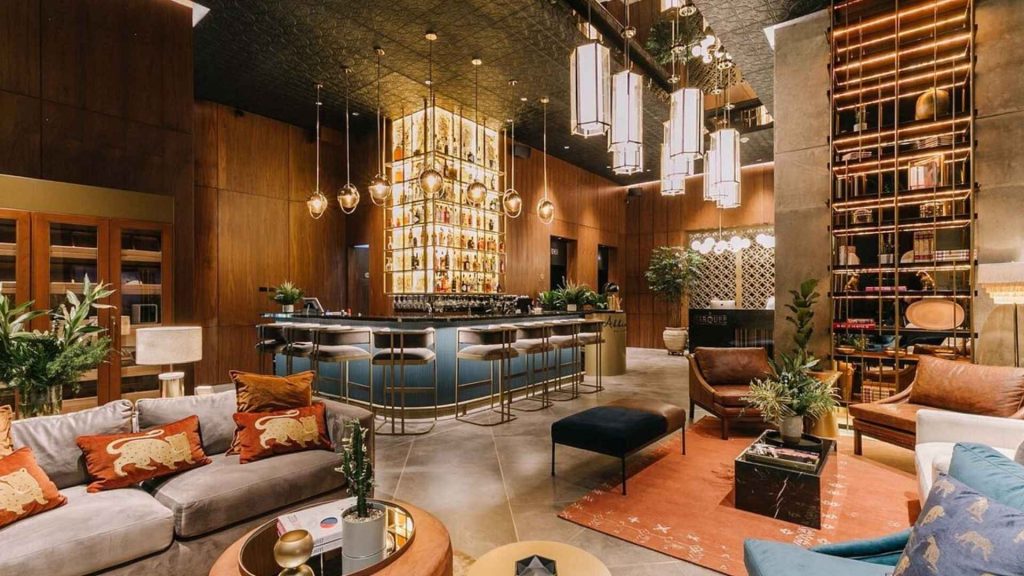
The city around (curated “city essentials”)
A) Key urban spots
Parque de la 93: an active urban point, useful for informal meetings.
El Virrey: a green corridor for disconnection without leaving the area.
Zona T: commercial and dining hub with quick access.
B) Nearby restaurants
Harry Sasson: reference for executive dining.
Osaka: contemporary cuisine in a refined setting.
Club Colombia: a consistent, classic option.
C) Banks / ATMs
Bancolombia: wide coverage.
Davivienda: accessible in commercial zones.
BBVA: international operations.
D) Currency exchange
Located in commercial areas.
Available within nearby shopping centers.
E) Clinics / hospitals
Clínica del Country: private healthcare.
Fundación Santa Fe: leading medical institution.
F) Shopping centers
Andino: international brands and services.
El Retiro: quieter, more curated experience.
Atlantis: functional and accessible.
G) Parks / quiet walks
El Virrey: ideal for active routines.
Parque de la 93: short walks.
More silent options within residential surroundings.
How to move (transport and transfers)
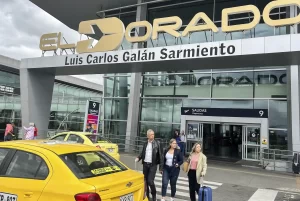
Mobility is best managed through anticipation. Using private transport or executive drivers allows control over time. Peak traffic hours require planning, so concentrating activities in nearby areas reduces friction. When the residence is in a walkable environment, many trips simply disappear.
Moving less—but better—is part of the experience.
FAQs
Is a penthouse better than a hotel in Bogotá?
It depends on the level of privacy and control required during the stay.
Do hotels offer more services?
They offer visible services, but not always privacy or continuity.
Does the climate affect the stay experience?
It influences mobility, but does not limit the experience if managed well.
Is it safe to stay in these areas?
They are active zones with services, though planned mobility is always recommended.
What type of stay is better for long trips?
An operated residence offers more stability and long-term control.
Why this works for executives
For professionals making constant decisions, the environment cannot be an unstable variable. It needs to be reliable.
A hotel solves immediate needs. An operated residence sustains processes.
The difference is reflected in how each day is lived: fewer interruptions, more clarity, greater control.
Calm decision checklist:
- Real privacy without constant flow of people
- Space that adapts to personal rhythm
- Location that reduces movement
- Consistent operation without variation
- Deep rest that sustains performance
Before deciding, it is key to understand what to review before choosing a premium residence to ensure consistency in every stay.