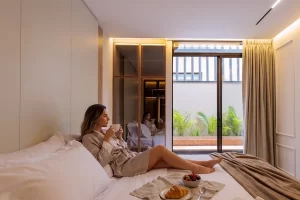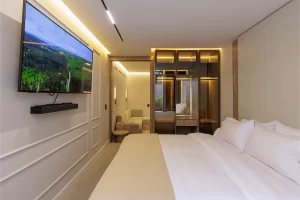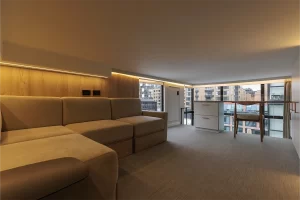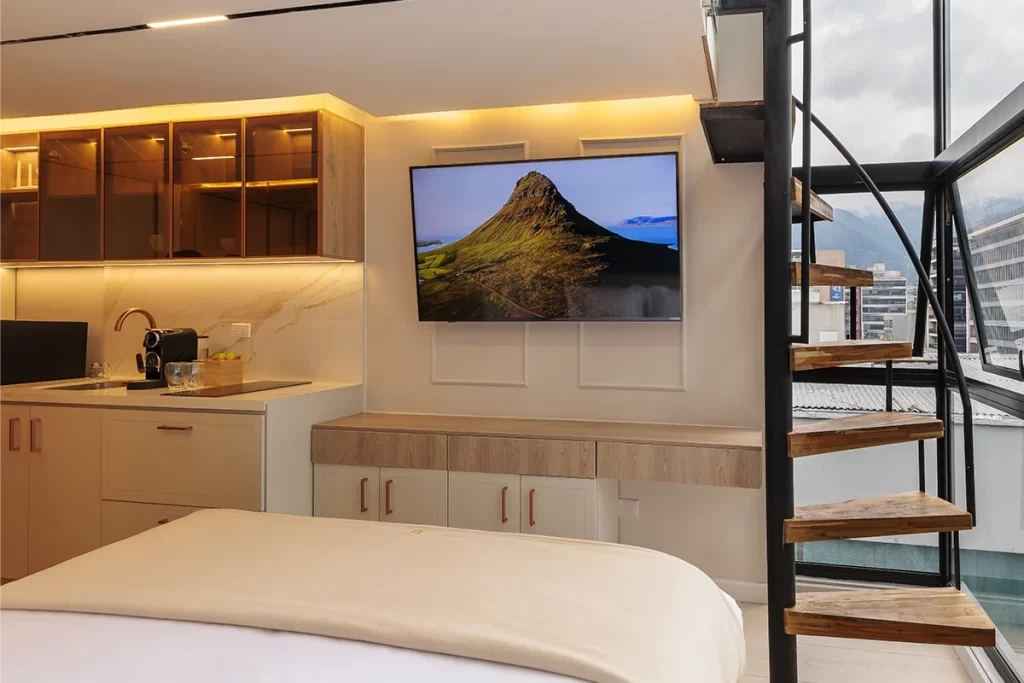
The three appear in the search results under the same label-general of luxury accommodation. The three can have a picture well produced and descriptions that sound good. And the three of them can be completely different depending on the length of stay, the type of agenda and what the executive needs of your space.
The confusion occurs because the terms are used interchangeably in platforms and ads, without much consistency. This guide explains what is really each one, what type of accommodation works best and how to choose wisely before committing.
In summary
Loft, studio and executive suite are different formats with different logic. The loft has height and visual amplitude, but not always functional separation between areas. The studio is compact and efficient for shorter stays but may fall short to weeks of intense work. The executive suite has real separation between work and rest, larger surface area and functionality oriented design for longer stays. For the executive who travels to Bogota with corporate agenda, the correct format depends on how many days you stay and how to use the space during the day.
What is a loft apartment and when it makes sense
The loft is a floor space of open, usually with double-height or high ceilings, where the different areas, bedroom, living room, work area, they share the same volume without physical splits. Visually impacts. In the photography is very well.
The problem for the executive use it is precisely this openness. Without separation between the work area and the rest area, the space does not allow the brain to distinguish between the two modes. You work where you sleep and you sleep where they worked. For stays of one or two nights that is manageable. For a week of intense work, it is a factor that accumulates.
The loft makes sense for the executive creative that seeks inspiration from the environment, for shorter stays or for those who work primarily out of the accommodation and only used the room to sleep and get ready.
What is a study and what type of accommodation works
The study is the most compact option. A single room that integrates bedroom, living room and work area in a space that usually ranges from 20 to 40 square meters. Well-designed, can be very functional. Poorly designed, it becomes a space where everything interferes with everything.
For the executive who comes to Bogotá for two or three nights with an agenda out of the accommodation during the greater part of the day, the studio well-equipped may be sufficient. The criterion is not the size but the quality of what you have: connectivity real bed with a mattress of high quality, functional desk, and basic equipment in good condition.
For stays of five days or more, the study begins to show its limits. The lack of space to separate work and rest, the difficulty to receive a call without which the atmosphere of the bedroom is in the frame of the camera and the feeling of always being in the same space, generate a kind of fatigue that you do not have to do with the work but also with the environment.
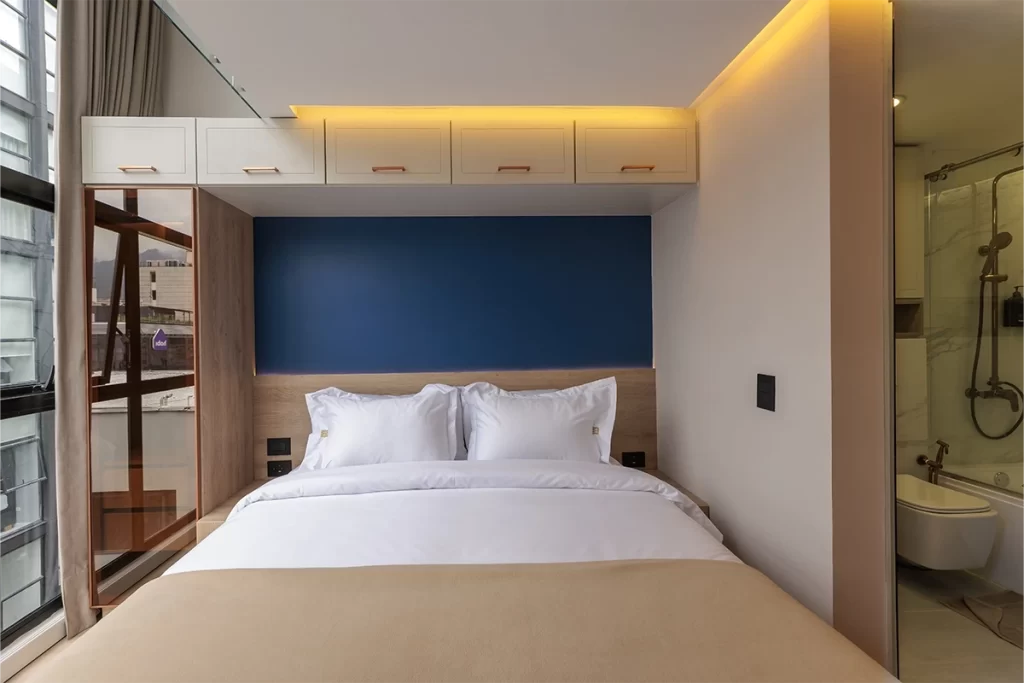
What is an executive suite and why it’s different
The executive suite has real separation between areas. There is a bedroom with a door, a seating area or a work differentiated and, in the best cases, a functional kitchen that allows you to solve the breakfast and dinner without leaving. The surface is higher, but what really sets the suite are not in square meters but the logic of the design.
In an executive suite is well thought out, the executive may terminate a video call, close the door of the work area and enter the bedroom without the two spaces are contaminated visually or acoustically. That seems like a detail. For someone who has spent five days in the same space, is the difference between a rest of truth or continue processing work while you try to sleep.
The residences of VEZRA in Bogotá are designed with this logic. The Building Fusion 93B has units T1 and T2 where the separation between areas is real, not decorative, and design covers the use of functional during stays working.
The variable most often ignore: how many days will you stay
The choice between loft, studio and suite is not just a preference. It is of duration.
For a night or two: the study or well equipped loft in a good location are reasonable options. The priority is the location and connectivity.
Three-to five-nights: the executive suite is beginning to have a clear advantage. The separation of areas and functionality of the kitchen make the stay more sustainable.
For a week or more: the executive suite is virtually the only option that keeps the level of functionality and comfort needed to support an agenda of intense work without the housing to turn into a factor of wear.
How to check the actual format before you book
The descriptions in platforms do not always correspond to the actual format. A ‘luxury studio’ can be a loft small. An ‘executive suite’ can be a study with a folding screen separating the bed from the desk. To verify:
- Request drawing or detailed description of the layout before committing
- Ask specifically if the bedroom has a door
- Confirm if the work area is separated from the rest area
- Ask for the actual dimensions of the desk, and if the chair is ergonomic
- Verify if the kitchen is fully equipped or you only have a microwave and coffee maker
An operator who can answer these questions with clarity and detail is an operator that knows your units and manage them directly. That, by itself, as it is relevant information about the quality of accommodation.
Before you choose the format of accommodation in Bogotá
- To define the exact duration of the stay
- Map out how many hours per day you use the space to work in
- Consider if you will receive visits or calls from the accommodation
- Check if you need to a kitchen functional for the type of stay
- Confirm that the operator can describe the layout with precision
- Ask for conditions of direct booking for more flexibility
The right space is not the largest nor the most expensive
It is the one that corresponds to the next week. For the executive who arrives to Bogota with heavy agenda and several days of stay, this week requires a space to work, rest and recover are things that occur in different environments, although in the same apartment.
To explore the options available units in Bogotá and confirm which format is better to stay, the team of VEZRA can guide the decision before you commit.
The executive of the question before choosing the type of space in Bogota
What is the real difference between a loft, a study, and an executive suite?
The loft is open-plan with no physical splits between areas. The study integrates all functions in a compact space. The executive suite has real separation between bedroom and work area, larger surface area and design oriented to longer stays.
For how many nights should each format?
The study works well for one to three nights with agenda primarily outside of the accommodation. The loft makes sense for creative profiles or stays very short. The executive suite is the more sustainable option for five nights or more with work from the accommodation.
Does it matter that the bedroom have a door in an executive suite?
Yes, more than what it seems. The physical separation between the work area and the rest area, allows the brain to differentiate between the two modes. Without such a separation, the work space pollutes the rest and vice versa, especially in long-term stays.
How to verify that an accommodation in Bogotá has the format promises?
Asking the operator detailed description of the layout, if the bedroom has door, dimensions of the desk, and actual equipment of the kitchen. An operator that is managed directly by your unit can answer these questions accurately.
What are the residences of VEZRA in Bogotá have real separation between areas?
Yes. Units T1 and T2 of the Building Fusion 93B have separation between bedroom and living area, functional design to work from the accommodation and a fully equipped kitchen.
Is it better to book direct or through the platform for this type of accommodation?
Book direct with the operator gives access to more precise information about the space, more flexible conditions for changes or extensions, and direct support during the stay, without any intermediaries.