During extended stays, housekeeping is not a secondary detail. It becomes part of daily structure. When a corporate trip lasts several weeks, the environment must remain stable without interrupting the guest’s rhythm.
In a premium residence — whether a furnished apartment in Bogotá, Panama City, or San José — scheduled housekeeping and discreet service are embedded in the system, not improvised.
What truly matters is not visible frequency, but invisible coherence.
Service without exposure
In urban hospitality, service can either feel intrusive or integrated. The difference lies in operational design.
1. Clear and anticipatory scheduling
Scheduled housekeeping removes uncertainty.
- Dates defined in advance
- Agreed time windows without friction
- Brief and precise communication
During an extended executive stay, guests should not need to reorganize their agenda around operational matters.
Predictability protects time.
2. Efficient and contained intervention
Discreet service is characterized by:
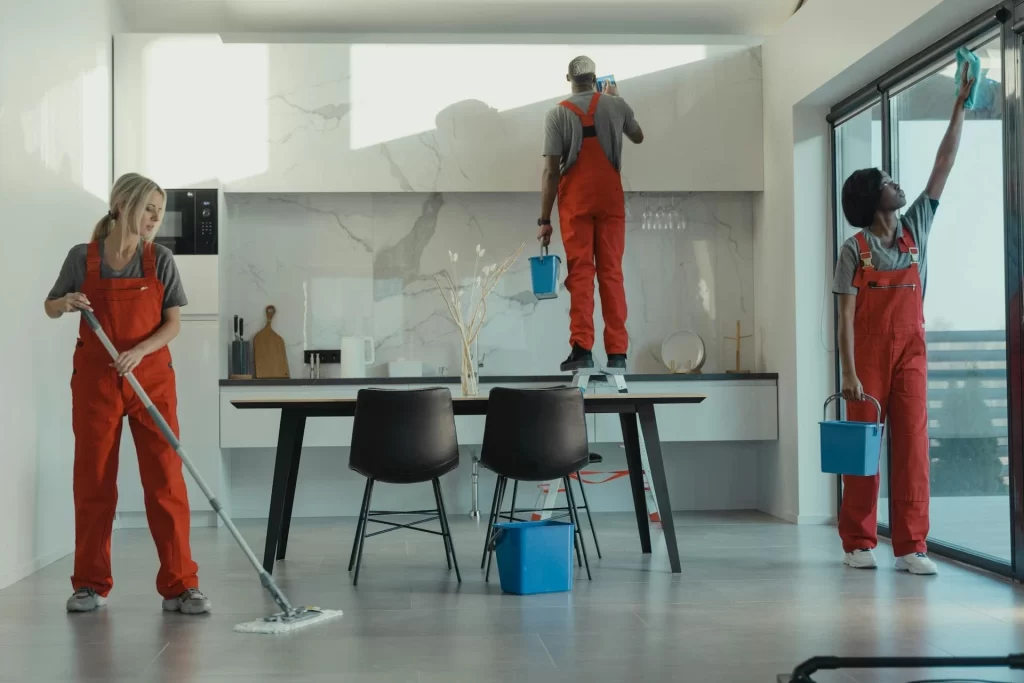
- Structured and punctual interventions
- Respect for personal belongings and work areas
- Appropriate duration without unnecessary extension
In fragmented corporate short-term rental models, variation between visits may occur. In a directly operated residence under standards such as The VEZRA Standard™, interventions follow uniform protocols.
Consistency builds trust.
3. Quiet preventive maintenance
Housekeeping is one layer. Preventive maintenance is another.
Scheduled technical reviews, system checks, and attention to minor details reduce the likelihood of incidents during the stay.
In prolonged executive travel, small failures become amplified. Prevention is part of the standard.
The best service prevents issues before they arise.
4. Privacy as an operational principle
In financial districts across Bogotá, Panama City, and San José, discretion is not optional.
Service without exposure implies:
- Controlled access procedures
- Direct communication through a single point of contact
- No unnecessary circulation within the building
Operations should integrate into the environment without drawing attention to themselves.
What truly matters in extended stays
During short stays, housekeeping may be perceived as convenience. Over several weeks, it becomes infrastructure.
Its value lies in:
- Environmental stability
- Reduced logistical friction
- Continuity of experience
An executive furnished apartment within a corporate center must maintain order and functionality without disrupting concentration.
Operational trust is built through sustained details.
Integration between design and operations
Design supports discreet service when:
- Spaces follow a clear organizational logic
- Surfaces allow efficient maintenance
- Layout minimizes unnecessary interference
Direct operation integrates these decisions from the outset. The goal is not to add service layers, but to structure them.
Within Operational trust, scheduled housekeeping is a tangible expression of standard.
Comparison: reactive service vs scheduled service
| Reactive service | Scheduled service |
| Unexpected interventions | Defined calendar |
| Variability between visits | Uniform protocols |
| Higher friction | Integrated into guest rhythm |
| Problem correction | Structural prevention |
FAQs
How often should housekeeping be scheduled during extended stays?
It depends on length of stay, but it should be agreed in advance and remain consistent.
Does frequent service affect privacy?
It can, unless structured under clear and discreet protocols.
What distinguishes a directly operated residence?
Consistency of process and centralized accountability.
Is preventive maintenance visible to guests?
Not necessarily; its effect is perceived in the absence of disruptions.
Why is this critical in extended executive travel?
Because repeated small interruptions impact concentration and performance over time.